Articles Posted in Construction Law

Published on:

Thumbnail image for stock-photo-4688227-new-home-construction.jpgNew Jersey provides new home owners with a warranty under New Jersey’s New Home Warranty and Builders’ Registration Act (“HOW”). The Act provides that newly constructed homes must conform to certain construction and quality standards and provide buyer of the new home with insurance-backed warranty protection in the event any of the standards are not met. Simply put, the Act provides that every new home sold in New Jersey comes with a warranty.

Builders of new homes must register with the New Jersey Department of Consumer Affairs to be permitted to engage in the business of building new homes. Builders are then required to provide a three-tiered warranty program which provides coverage and protection against defects.

Warranty coverage extends to defects caused by faulty workmanship and defective materials during the first year of ownership. The one year begins to run on either the first day of occupation or the settlement date, whichever is sooner. Additionally, during the first two years new home owners have a warranty that covers defects caused by faulty installation of heating, electrical, plumbing, and cooling systems. The Act, however, does not extend the coverage to appliances beyond the warranty provided by the manufacturer. Finally, the Act provides for warranty coverage to major construction defects of the home for ten years.

At first glance the Act appears to provide homeowners a cost-savings means of resolving disputes concerning construction defects. However, in reality the Act makes it difficult for homeowners to resolve construction defects. For example, “major construction” defects have been interpreted by the courts very stringently. Generally, the act affords no protection unless the new home is practically collapsing. Additionally, common problems such as leaks, mold, and excessive settling are not covered.
Continue reading

Published on:

highlands.jpg
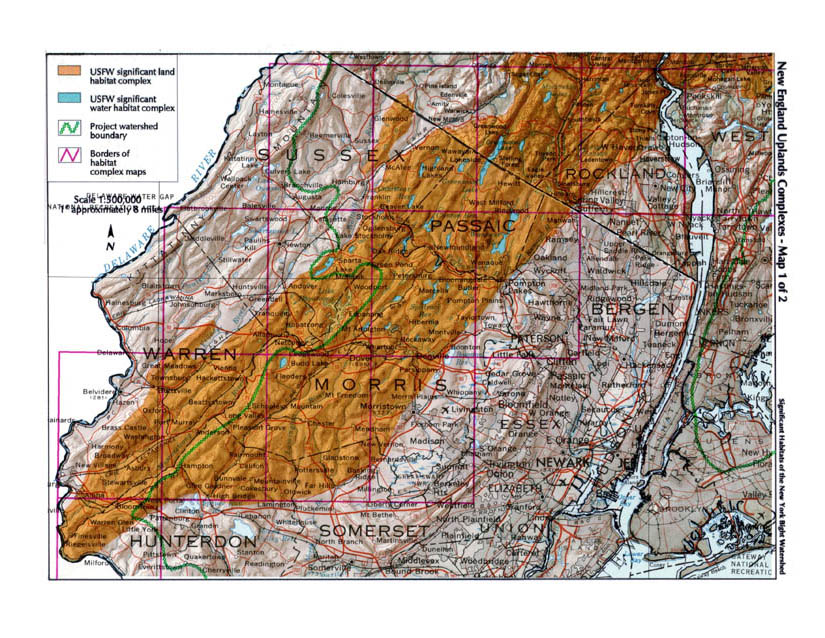
The Highlands Water Protection and Planning Act is a relative new law, signed by New Jersey’s then-Governor McGreevey on August 10, 2004. The Highlands Act seeks to protect the ecological integrity of the highlands region in northwest New Jersey. In short, the Act, under the New Jersey Department of Environmental Protection’s supervision, regulates and restricts development in the area. Indeed, it aims to protect and preserve not only the area’s animal and plant life but also a large source of fresh water for human consumption.

The New Jersey Highlands covers a vast span of the state covering over 1,250 square miles, and is home to nearly nine hundred thousand residents primarily in the counties of Warren, Morris, Hunterdon, Passaic, and Sussex.

Of the over eight hundred thousand acres of the Highlands region, nearly four hundred thousand acres have been designated as the Highlands Preservation Area. The remaining acres are designated as the Highlands Planning Area.
Continue reading

Published on:

construction 9-10.JPGThere are severe civil and administrative penalties for misclassification of workers who should actually be employees as independent contractors. If a worker is classified as an employee, the employer must pay approximately an additional 7.5 percent of her salary in payroll taxes, as well as workers compensation insurance, and the benefits which other employees get. This gives businesses a strong incentive to classify workers as independent contractors. However, this has long been illegal under both federal and New Jersey Employment law.

New Jersey has found this practice to be widespread in the construction industry, depriving workers of benefits, social security taxes, and forcing the employer to pay self-employment tax, or the employer’s portion of the payroll taxes. Additionally, the New Jersey Legislature has found that this puts businesses currently classifying workers as employees at a competitive disadvantage with those whose do not because of the higher costs they bear. New Jersey therefore enacted the New Jersey Construction Industry Independent Contractor Act.
Continue reading

Published on:

New Jersey’s Contractors’ Registration Act, passed in 2004, requires contractors to register with the Division of Consumer Affairs (known as “the DCA,” a part of the Department of Law and Public Safety in the Attorney General’s Office) and disclose specific information to homeowners in a written contract. Violation of this act carries significant penalties.

The Act requires disclosures such as start and stop dates; materials to be used; and payment amounts, breakdowns, due dates and bench marks. It also requires proof of insurance; display of registration numbers; certain other specific information; copies of warranties; and notices of the consumer’s right to cancel within three business days.

Violations of same provisions of the Act can be crimes of the fourth degree, with sentences up to eighteen months in prison, and violation of New Jersey Consumer Fraud Act, which entitles homeowners to triple damages plus their attorneys fees. Therefore, it is good practice for contractors to have experienced attorneys who know the requirements of the Act draft their written contracts.

Contact Information