Articles Posted in Uncategorized

Published on:

hands-1170549_960_720
The New Jersey Achieving a Better Life Experience (ABLE) Act became law on January 11, 2016, it becomes effective on October of 2016.  While due to its limitations it does not replace the special needs trust, it will be a cost effective way to assist individuals with disabilities.

Under the new Act the New Jersey’s Department of the Treasury and the New Jersey’s Department of  Human Services must establish the ABLE Program pursuant to federal law. Under the program, individuals who became disabled before they attained the age 26 and who are also able to meet the disability requirements for Social Security disability benefits are permitted to establish an ABLE account, and they themselves can be the beneficiary of that account. The purpose of an ABLE account is to enable people with disabilities and their families to save and pay for disability-related expenses.

An ABLE account is not subject to state income tax, and it will not be considered to determine the beneficiary’s eligibility for need-based public benefit programs or to determine the level of any benefit provided under such a program.  However, a disabled individual can only have one ABLE account established for their benefit.

Published on:

hauler
Virtually every business in New Jersey is regulated in some way, shape, or form. Accounting firms are regulated by the Department of Law & Public Safety and regulations require accounting firms to have certified public accountants. Home improvement contractors are often required to be registered with the Department of Labor and Department of Treasury. Health clubs are required to register and issue a security bond with the Department of Law and Public Safety. Restaurants are regulated by local health departments. However, businesses which involve the transportation, storage, or disposal of solid waste are some of the most regulated and highly scrutinized businesses in the State of New Jersey.

Solid waste haulers or transporters are regulated by the New Jersey Department of Environmental Protection (“NJDEP”), Division of Solid Waste Management and/or the Division of Solid & Hazardous Waste Management.

However, first, for tax and liability purposes, a business will generally form a company or business entity (such as a corporation or limited liability company). In doing this, the company will likely file for a Certificate of Formation and a request a FEIN (or Federal Employer Identification Number).

Published on:

McLaughlin & Nardi’s New Jersey construction attorneys recently completed a construction arbitration in the American Arbitration Association.  After hearing the evidence, the arbitrator awarded our clients $289,918.  Maurice McLaughlin was the lead trial attorney.  He was assisted throughout by Pauline Young and Robert Chewning, who second chaired the hearings.

Background

The case involved Essex County homeowners who had contracted for extensive renovations to their kitchen.  The total cost of the kitchen renovations was $152,725.  The homeowners paid $126,362.50.  However, the contractor never completed the job.

Published on:

frameup.jpgIn New Jersey home improvement contractors are heavily regulated by the Consumer Fraud Act (the “CFA”). The CFA and administrative regulations require strict compliance which cannot be ignored. Failure to follow these requirements can result in the home improvement contract to be found invalid and a homeowner’s a ascertainable lose can result in the home improvement contractor paying triple that amount and attorneys fees to the home owner.

However, recently the New Jersey Appellate Division held that a home improvement contractor can recover the value of the services rendered even if the contract violated the CFA.

In Gemini a dispute arose between a homeowner and his contractor with regards to home improvement renovations. The homeowner hired a contractor and an architect, who was his friend, to perform renovations on the home. The architect was the intermediary between the homeowner and the contractor. The architect made all the decisions for the homeowner and worked directly with the home improvement contractor.

The contractor initially began the work for the homeowner pursuant to a written contract. After the work began, however, the homeowner sought various changes which the contractor orally agreed to perform and, subsequently, would forward his bills to the architect. A subsequent contract for the additional work was never prepared.
Continue reading

Published on:

stock-photo-20868697-commercial-real-estate.jpgWhat does an employer’s use of criminal history information in hiring decisions have to do with employment discrimination? The U.S. Equal Employment Opportunity Commission (EEOC) has determined that an employer’s use of an individual’s criminal history in making employment decisions could violate the prohibition against employment discrimination.

The situation has attracted attention from lawsuits involving an automobile manufacturer and a discount retailer who are alleged to have inappropriately used criminal background checks to deny employment to workers, resulting in discriminatory treatment. The lawsuits were brought under Title VII of the Civil Rights Act of 1964. Title VII is enforced by the EEOC and prohibits employment discrimination based on race, color, religion, sex and national origin.

The EEOC issued updated employment guidance to address findings that the application of criminal background checks for employment decisions results in a disparate impact based on race and national origin. African Americans and Hispanics are incarcerated at rates disproportionate to their numbers in the general population, indicating an increased potential for disparate impact, but employers can show in an EEOC investigation that their particular employment policy or practice does not cause a disparate impact on the protected group.

Courts look to the following types of evidence to determine whether an employer was motivated by race, national origin, or other protected characteristics when using criminal records in a selection decision:

  • statements that are derogatory concerning the charging party’s protected group;
  • evidence that the employer requested criminal history information more often for individuals certain racial or ethnic backgrounds or did not give equal opportunity to explain criminal history to all groups;
  • treating a charging party differently from others not in the same protected group;
  • results of matched-pair testing that show different treatment because of a protected status; and
  • results of statistical analysis of applicant data, workforce data, or third party criminal background history data.

Continue reading

Published on:

stock-photo-19369246-checklist.jpgEveryone should do their best to avoid accidents that lead to injuries such as car, bus, motorcycle, or trucking accidents, a slip and fall accident, or a work related accident – but some accidents cannot be avoided. Once you get into an accident it can be hard to think clearly. You may be injured, stressed, confused, or overwhelmed. It is therefore important to keep a level head and follow the guide below to best ensure that your rights are protected.

Step 1: Report the accident to the appropriate authorities. Typically accidents are reported to the local police department. However, if you are on a state highway in New Jersey, the accident should be reported to the New Jersey State Police. Boating accidents must be reported to the New Jersey State Police, Marine Law Enforcement station in the area where the accident occurred. Work place injuries should be reported to management.

Do not discuss motor vehicle or boating accidents with others involved, this includes the other drivers’ insurance company. Direct any questions to your lawyer. Avoid posting comments on social media websites such as Facebook, Twitter, or Instagram, etc.

Discuss the accident only with the police during the investigations. All other discussions should be limited.
Continue reading

Published on:

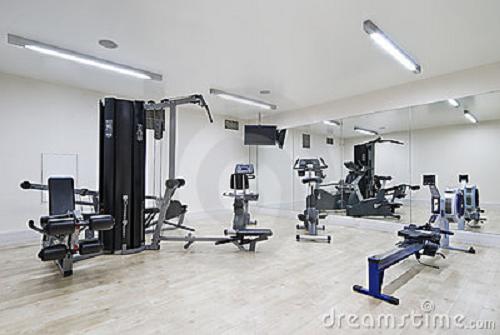
gym.jpgMany fitness centers have begun to open around New Jersey. Owners should be aware that New Jersey strictly regulates businesses that provide “physical fitness or physical well-being” services.

For example, every health club facility must register with the New Jersey Division of Consumer Affairs and renew the registration every two years. In addition, all health clubs must reregister a change in ownership. Registration can be complicated because the Division of Consumer Affairs may request information about the facility’s ownership and operations. Having an experienced attorney familiar with the registration process is important for any new business owner.

In addition, all New Jersey health clubs must maintain a bond equal to ten percent of the gross income for the last fiscal year. The bond must be at least $25,000. Further, a $50,000 bond must be maintained if the facility is not operating but provides pre-opening memberships sales. All bonds must be filed with the Division of Consumer Affairs. If the facility is closed for longer than thirty days all members are entitled to prorated refunds.

New Jersey law also requires that all facilities offering health club services to have written contracts, with a copy provided to the member. In addition, contracts must have specific language on specific pages. For example, a member’s total payment obligation must be on the first page of any health club services contract. The contract must also advise members that the bond was posted with the Division of Consumer Affairs.
Continue reading

Published on:

wedding.jpg

Background: Due Diligence, Purchases and Sales of Business

In the sale of a New Jersey business, buyers normally perform due diligence such as inspecting profits, losses, revenue, expenses, bank accounts, tax returns and financial statements and the like. Contracts for the sale of a business often say that the buyer is not relying on a seller’s representations, but rather only on its own inspections. In many instances, conducting inspections and due diligence may bar recovery when the buyer believed going in to the closing turn out to be incorrect. The question then becomes, what if those mistaken beliefs were brought about by the seller’s own fraud?

Bridals Gowns Not What They Appear

Anwar and Donna Walid were looking to buy a business. Donna had worked at a high end retail clothing store in New York, studied textile design, and obtained a master’s degree in organization and development. Anwar, Donna’s husband, had a degree in electrical engineering and had worked in research and development for Lucent Technologies. They were highly educated people.
Continue reading

Published on:

A New Jersey bankruptcy can be a helpful solution for a person struggling with debt. A New Jersey debtor can file for Chapter 7 liquidation or Chapter 13 reorganization. Each has its own benefits. Both provide relief to New Jersey debtors by wiping out their debts, thereby providing bankruptcy’s “fresh start.”

Chapter 7 Benefits

In New Jersey a Chapter 7 liquidation is relatively quick. Most people can get a discharge several months after filing for bankruptcy protection. This means that upon the completion of a Chapter 7 bankruptcy the court will order that debts are discharged and an individual can have a “fresh start.”

Published on:

New Jersey employment law is a comprehensive system which provides some of the strongest protections in the nation for New Jersey employees. New Jersey employees are protected against discrimination and whistle-blowing retaliation. New Jersey employment law provides for leave of absence for childbirth, adoption of a child, or serious health conditions. New Jersey has its own wage and hour laws that regulate minimum wage and overtime pay for New Jersey employees.

New Jersey’s Law Against Discrimination

The New Jersey Law Against Discrimination (the “LAD”) applies to all employers. The LAD prohibits discrimination or harassment in employment for a prohibited reason, including race, religion, color, gender, national origin, nationality, ancestry, age, marriage status, domestic partnership or civil union status, sexual orientation, identity, and disability. The list of protected job-related activities is expansive and includes recruitment, interviewing, hiring, promotions, discharge, compensation, and any term, condition or privilege of employment.

The LAD prohibits both intentional and inadvertent discrimination because of a discriminatory animus or bias. Intentional discrimination includes different treatment of individuals, as well as harassing statements or overt conduct. Indirect discrimination can include practices or policies that have an adverse impact on employees of protected categories. For example, requiring workers to be over six foot tall may have a disparate impact on woman and therefore violates the LAD. If, however, an employer can establish that the requirement is necessary to perform the job and there is no alternative available, then the policy would not violate the LAD.

New Jersey Whistle Blowing Protection

The Conscientious Employee Protection Act (“CEPA”) prohibits New Jersey employers from retaliating against employees who disclose, object to, or refuse to participate in actions which they reasonably believe are either illegal or in violation of public policy. CEPA protects all New Jersey employees and independent contractors. The New Jersey Supreme Court has described CEPA as the most far-reaching whistleblower statute in the nation. CEPA has been found so expansive that it even protects employees who erroneously accuse their employer of a wrong doing in good faith. New Jersey employees should beware, however, that in most circumstances they must advise a supervisor, in writing, and give reasonable time to correct the problem.
Continue reading

Contact Information