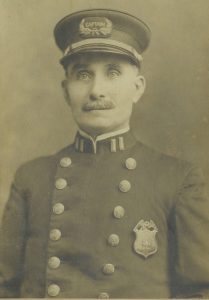
McLaughlin & Nardi is pleased to announce that the Honorable Peter F. Boggia, a retired judge of the Superior Court of New Jersey, will be joining the firm as of counsel. Judge Boggia will be concentrating his practice on alternative dispute resolution, particularly mediation and arbitration. His relationship with our attorneys goes back over thirty years to when Frank Nardi served as his intern while Judge Boggia was on the bench, and the judge occasionally agreed with Maurice McLaughlin’s arguments when he appeared before him.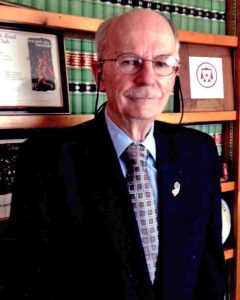
Judge Boggia served on the Superior Court bench for more than twenty years in the Civil Division, both as trial judge and acting presiding civil judge, handling complex trials, including class actions, product liability, medical malpractice and serious personal injury claims. He also helped settle hundreds of civil cases before trial, and instituted the first mediation program in the Bergen County Superior Court.
Prior to his appointment to the Superior Court bench, Judge Boggia served as Law Clerk to the Honorable Arthur J. O’Dea in the New Jersey Superior Court, and as an assistant prosecutor in Bergen County, handling serious criminal cases. He was House Counsel for Liberty Mutual Insurance Company, and in that position tried hundreds of cases and earned the distinction of Certified Trial Attorney. Judge Boggia sat concurrently as Municipal Judge in the Bergen County communities of Little Ferry, Leonia, Maywood, Bogota, and Fairview, New Jersey.
 New Jersey Lawyers Blog



 Education.

 New Jersey Supreme Court issued an opinion in the case of Extech Building Materials, Inc. vs. E&N Construction, Inc., explaining the requirements of an enforceable personal guaranty under New Jersey contract law. The main element is that the guarantor must clearly and unambiguously express its intent to personally guarantee the third-party’s obligation.

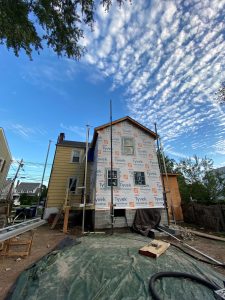 additional items to be included. A written change order to the original signed contract was drafted, but the change order was never signed. In January 2020 the home passed final inspections, and EMC’s owner, Edward Morgan, advised Dattolo that he could not continue working on the project. Dattolo refused to pay “one additional cent,” and complained that there were numerous construction defects which would cost him thousands of dollars to remediate.