 New Jersey Lawyers Blog
New Jersey Supreme Court Issues Important Employment Law Decision on Employment Contracts Requiring Arbitration of Wage and Hour Claims


The Arafa Case
The New Jersey Supreme Court issued an opinion in the case of Arafa v. Health Express Corporation in a consolidated appeals about a niche question regarding the interplay of the Federal Arbitration Act (the “FAA”) and the New Jersey Arbitration Act (the “NJAA”) regarding the  enforceability of agreements in employment contracts to arbitrate disputes under New Jersey employment law. The consolidated cases were both brought as class actions by employees whose duties included driving to make deliveries for their employers. In one of the appeals it was clear that the employees were making deliveries outside the state as well as in it, and were therefore engaged in interstate commerce; in the other it was not clear. In both cases the employers argued that the cases were not covered by the FAA, which contains an exemption which provides that the FAA will not apply to “contracts of employment of seamen, railroad employees, or any other class of workers engaged in foreign or interstate commerce,” which the United States Supreme Court has defined to include interstate deliveries. Because the drivers were not covered by the FAA due to the exception, the employers argued, they were covered by the NJAA, which did not contain such an exemption, and the arbitration agreements were therefore enforceable. Thus, the employers argued, the lawsuits in Superior Court should be dismissed and the cases submitted to binding arbitration. The trial judges in the Law Division of the Superior Court of New Jersey agreed with the employers and dismissed the suits and ordered them to arbitration. In both cases, the employees separately appealed, and different panels of the Appellate Division of the Superior Court reached different decisions. To resolve the split, the New Jersey Supreme Court agreed to hear the appeals.
Why does this matter? If it seems pretty arcane, it has significant real world consequences. First, the employees sued for unpaid overtime under the New Jersey Wage and Hour Law because New Jersey law and New Jersey courts are seen – rightly or wrongly – as more friendly to employees than federal court, which of course is why the employers didn’t want the case there. Moreover, arbitration is seen as much more friendly to employers than employees, which is why the two sides were fighting over it.
 firing or demotion. The Appellate Division recently issued an important decision on the ability of jurors to infer retaliation from circumstantial evidence.
 promotion must be made according to the eligible candidates’ ranks on the list. However, an exception exists. The Rule of Three allows New Jersey Civil Service employers to bypass eligible candidates ranked higher on hiring and promotion lists in favor of lower ranked candidates so long as they select one of the top three eligible candidates remaining on the list. After each decision to hire or promote, the Rule of Three evaluation begins all over again. So, for example, if the first candidate is selected, the employer may then select any of the candidates ranked second through fourth for the second spot.
 seniority and benefits for the period of their suspension.
 mayors, including New Jersey’s Governor Murphy, have said that widespread layoffs may be necessary if federal assistance is not forthcoming. Our attorneys represent New Jersey Civil Service employees, and we see the struggles they are facing. Given this, we thought the time was right to review the layoff rights available under New Jersey Civil Service law.
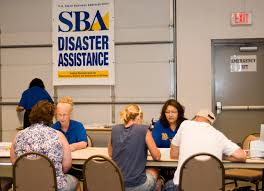 businesses seek financing under the new Federal Small Business Paycheck Protection Program. The basic elements of the program are below. Call us to obtain help. Applications are being accepted starting April 3rd, and funding is limited, so time is of the essence.
 economic hardships as a result of lost business during widespread closures and stay-at-home orders. The first major legislation passed by the federal government was the Families First Coronavirus Response Act which provided job protection and paid leave provisions. Now, the government has recently passed the Coronavirus Aid, Relief, and Economic Security Act (also known as the “CARES Act”).