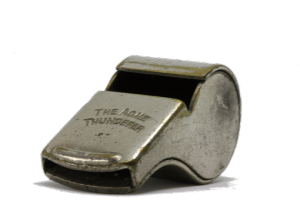
 In the case of DiFiore v. CSL Behring, LLC, a former pharmaceutical employee brought an action in the District Court for the Eastern District of Pennsylvania against her former employer for retaliation in the form of a wrongful, constructive discharge. In that case, the employee specifically brought claims under the federal False Claims Act (“FCA”) https://www.law.cornell.edu/uscode/text/31/3729 and Pennsylvania’s common law wrongful discharge cause of action. She claimed that she had raised concerns about off-label marketing of products which caused her employer to retaliate.
In that case, the District Court instructed the jury that, in order to prove retaliation under the FCA, the employee had to prove that the whistleblowing by the employee was the sole cause for the adverse action (firing or other retaliatory action). However, the plaintiff-employee argued that she need only provide that the whistleblower action was a motivating factor for the wrongful discharge – not that it was the only reason for the adverse employment action. The plaintiff was relying on a prior Third Circuit case, Hutchins v. ABC Corp. However, the Court determined that the “motivating factor” language in the Hutchins case was merely dicta – meaning that the language was extraneous to the decision and does not act as precedential.
The Court also decided that the United States Supreme Court decisions in Gross v. FBL Financial Services, Inc. and University of Texas Southwestern Medical Center v Nassar indicate that a “motivating factor” test is inappropriate. (The Gross case considered a claim under the Age Discrimination in Employment Act (“ADEA”) and the Nassar case considered a claim under Title VII of the Civil Rights Act.) In both cases, the Supreme Court found that the language “because of” in those laws, equated to the requirement of “but-for” causation. In other words, the adverse action would not have happened “but for” the improper motivation, requiring that to be the exclusive motivation. The ADEA, Title VII, and the FCA all contain that same language.
 New Jersey Lawyers Blog


 enacting the Law Against Discrimination, New Jersey has provided its workers with some of the strongest anti-discrimination laws in the United States. New Jersey’s Law Against Discrimination protects against employment discrimination, including harassment, because of these protected categories
 The United States Supreme Court issued a major decision on tolling the statute of limitations on state law claims while the case is in federal court which has significant impact on New Jersey employment litigation. In the case of
  When you purchase a liquor license in New Jersey, as a Buyer you must be approved by the State of New Jersey Alcoholic Beverage Commission and the Municipality where the business operates. This process is detailed and time consuming. it must be started as soon as possible by the Buyer. You will need to obtain a Person to Person Transfer of the liquor license. Unless and until the municipality issues a resolution approving of the transfer of the liquor license, the current license holder must operate the business.
 Both New Jersey’s
  Our employment lawyers represent many honorable New Jersey employees in disputes with their governmental employers.
 In 2014, New Jersey’s Governor Christie signed The Opportunity to Compete Act which limited an employer’s ability to ask a potential employee about criminal records in many circumstances. The State passed this law based upon several findings, including:
 New Jersey employment law protects employees who object to or report illegal conduct by their employers. New Jersey’s whistleblower protections, particularly the Conscientious Employee Protection Act, have been recognized as the strongest in the nation. The various sources of these protections are discussed below.
 The short answer is: yes.
 Disputes over construction projects can be costly, time-consuming, complex and unpredictable endeavors. Arbitration is a mechanism often used to avoid these pitfalls by many in New Jersey construction law. Attorneys from our firm have significant experience in litigating and arbitrating construction disputes. One of the most contentious areas is whether a dispute is subject to arbitration or whether it may be litigated in court. Even more complex is trying to figure out which parts, if any, are covered by an arbitration in multi-issue disputes. New Jersey’s courts recently faced just this problem and issued an important precedential decision.